
Air Duct Cleaning · New Hampshire
Air Duct Cleaning in Goffstown, New Hampshire
Built for older duct layouts across Hillsborough County routes like NH 13, NH 114, and NH 114A.
Clearer ducts for mixed-era homes
Goffstown duct cleaning is often driven by mixed-material systems in homes that changed room by room. Village properties, Pinardville houses, and postwar ranches may combine older metal trunks with newer flex branches, patched returns, and runs added to porch conversions or later family-space remodels. That combination changes where dust collects and why certain rooms feel off balance. The problem is usually tied to transition points in the ductwork rather than to one simple basement pattern.
Armstrong Duct & Vent cleans these residential systems with source-removal methods adapted to older trunks, later add-on sections, and circulation trouble spots created by remodeling. Technicians plan access around the actual mix of materials, work under negative pressure, and clean accessible HVAC components when serviceable. That gives Goffstown homeowners a process grounded in patched returns, converted spaces, and room-addition airflow issues.
Key Benefits
River-Valley Basement Trunks, Handled Carefully
Porch conversions and later room additions create trouble spots in Goffstown duct systems that were not designed all at once. Dust often hangs up where an older metal trunk meets a newer branch or patched return, and that is where room-to-room imbalance starts showing up. Armstrong cleans through those modified sections so debris is removed from the parts of the system altered during remodeling.
Dust Paths in 1950s Ranch Ducts
In Goffstown, circulation complaints often follow the remodeling history of the house. A former porch turned living space or a patched return in a postwar ranch changes how air moves, and debris settles where the path narrows or shifts direction. Armstrong cleans beyond the visible grilles so those altered sections are treated as part of the working system rather than skipped over.
Spring Startup for Older Village Homes
Older metal trunks, later flex runs, and patched return sections make Goffstown jobs depend on careful planning. One access method does not fit every material or every remodeling phase, especially in homes updated room by room over many years. Armstrong adapts tools to the layout, protects floors and wall corners, and keeps the work organized inside occupied houses.
Split-Levels With Hard-to-Reach Runs
Some comfort complaints start in rooms that never seem to get the same delivery as the rest of the house. In Goffstown split-levels and colonials, tight runs to upper rooms and patched return paths can collect debris that interferes with steady circulation. Armstrong uses remote-reaching tools and layout-specific access methods to clean deeper into those runs, which supports more even delivery and a more comfortable feel from room to room.
Trust Built on Proof
Trust matters differently in Goffstown because older village properties and renovated ranches often hide retrofit ductwork that is not obvious from the room side. Armstrong brings a structured source-removal process, follows NADCA standards, and provides before-and-after video documentation so homeowners can see what was inside the system and what changed. For homes with patched trunks, older metal runs, or mixed materials, that transparency and adaptability give the service real credibility.
Trained Technicians
Fully trained and NADCA-certified to remove all debris from your system, safely and thoroughly.
Fully Insured
General liability and workers’ compensation coverage on every job, for your complete peace of mind.
Digital Report
A detailed inspection report with before-and-after photos, emailed to you at the end of the job.
100% Quality Guarantee
We work hard to reach 100% satisfaction on every visit — and we won’t stop until we do.
What to check in local reviews
If your house has exposed basement ductwork, older trunk lines, or a split-level layout, the review section helps you see how Armstrong handles homes like that. Look for comments about scheduling, communication, care inside occupied homes, and whether the crew explained what they found before and after the work. Those details matter in Goffstown because the housing mix changes quickly from Pinardville to village properties to hill-side neighborhoods.

 1 week ago
★★★★★
Brandon and Austin were professional, competent, and detail- oriented. They communicated the process, the estimated length of time and provided updates on a regular basis. This is the second time we've used Armstrong services and would not hesitate to do so again. It's a relief to actually get what you pay for. Thank you, Armonstrong Team. Dave and Marsha Miller
Posted on Google

 2 weeks ago
★★★★★
Very professional and very quick, they did a fantastic job would highly recomend
Posted on Google
 2 weeks ago
★★★★★
My two Armstrong employees were excellent! They were knowledgeable, polite, and professional. I was notified of the exact arrival time. They were very comprehensive. As a new home owner I couldn’t answer many of their questions but they were able to provide good service to clean all the ducts in my home. They left the place spotless too.
Posted on Google
 3 weeks ago
★★★★★
Company came on time worked efficiently to clean my Dryer duct. They were very courteous and friendly, and I would highly recommend them to friends and family.
Posted on Google
Questions, answered
Frequently Asked Questions
What makes older metal ductwork a common cleaning issue in Goffstown homes?
Before summer startup is a strong choice when the system has just finished a long heating season. Armstrong cleans the main trunk lines and branch runs with source-removal methods, then addresses accessible HVAC components as part of the service scope. Completion can be confirmed with before-and-after video inspection, which is useful when you want a clear record of the system condition before cooling season begins.
How is duct cleaning handled in Goffstown homes with retrofit branches?
Remodeling changes what ends up inside the duct system, especially in older village homes with patched sections or retrofitted runs. Armstrong contains the work with negative pressure, protects floors and wall corners, and adjusts access based on the layout of the home. If a kitchen, bath, or energy-upgrade project sent fine debris into returns or trunk lines, a professional cleaning removes that material from the system instead of leaving it to keep circulating.
How does system age affect air duct cleaning in postwar ranch homes?
Older systems deserve closer inspection because duct material, access points, and past repairs all affect the job. A good rule is to evaluate cleaning needs every 5 to 10 years, and sooner when you see dust at registers, smell stale air at startup, or move into a home with an unknown service history. In Goffstown postwar ranches, exposed basement trunks and older returns make those signs easier to spot and easier to inspect.
Do pets in Goffstown homes change how often ducts should be evaluated?
Yes, pet hair and dander raise the load inside the system, and a long heating season keeps that material moving through the house. Homes with dogs or cats usually need evaluation sooner than homes without pets, especially when filters load up quickly or dust gathers near returns. In Goffstown’s mixed housing stock, pet-heavy homes with basement returns or older branch runs usually show the need for service earlier.
Why do room additions change duct cleaning needs in Goffstown houses?
Professional cleaning reaches the main trunk lines, branch runs, and system access points that household tools cannot reach. Armstrong does not rely on vacuuming through individual vents alone. The service uses negative air equipment, mechanical brushing, and compressed-air tools, with access adjusted to the duct layout. In split-level homes, that matters because tight runs and direction changes hide buildup well beyond the register opening.
What maintenance follows air duct cleaning in older Goffstown basement-system homes?
Filter care comes first, and Armstrong checks the system filter and installs a replacement if one is available. The service can also include cleaning accessible components such as the air handler, blower area, fan blades, evaporator coil, and condensate pan when serviceable. In older Goffstown homes with basement-based systems, that added component cleaning supports a cleaner path through the full HVAC system instead of stopping at the ducts alone.
Free · No obligation
Contact Us Today for a Free Quote
Tell us about your home and we’ll get back to you fast with a no-obligation quote. Prefer to talk? Call 800-736-2706.
Who is Armstrong?
The Team Behind the Work
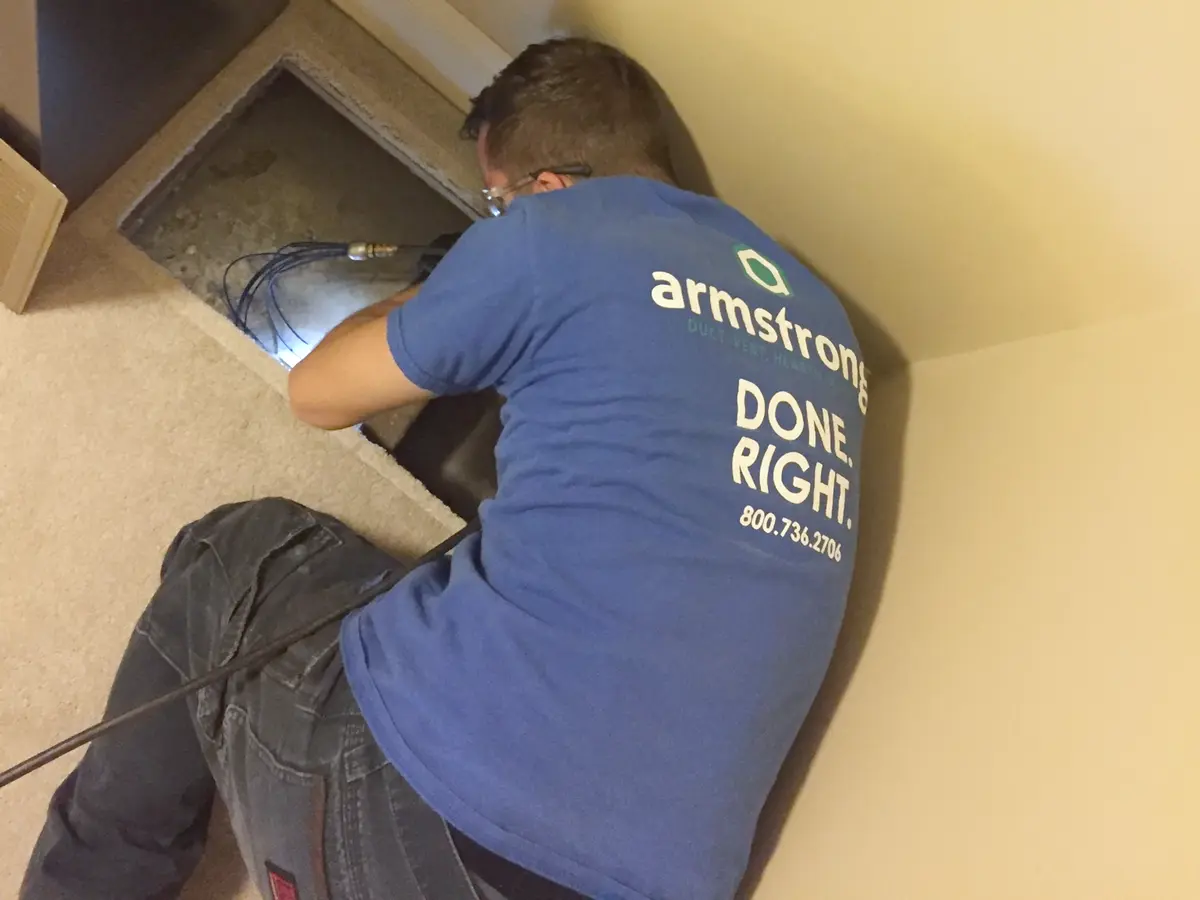
Mixed duct materials are a defining issue in Goffstown homes. Village properties, Pinardville houses, and postwar ranches often combine older metal trunks with later flex runs, porch-conversion branches, and patched returns added during room-by-room remodeling. Those changes tend to show up as one room feeling out of step, debris collecting at certain grilles, or dust hanging on in the sections altered after the original install. Armstrong Duct & Vent cleans these residential systems with a methodical process that adapts access to the layout, works carefully in lived-in homes, and addresses the full supply-and-return path instead of treating the house like a uniform basement setup.